
The Best Communication Lesson You Can Teach An Employee

Teaching Employees How to Communicate Using the What? So What? Now What? Model
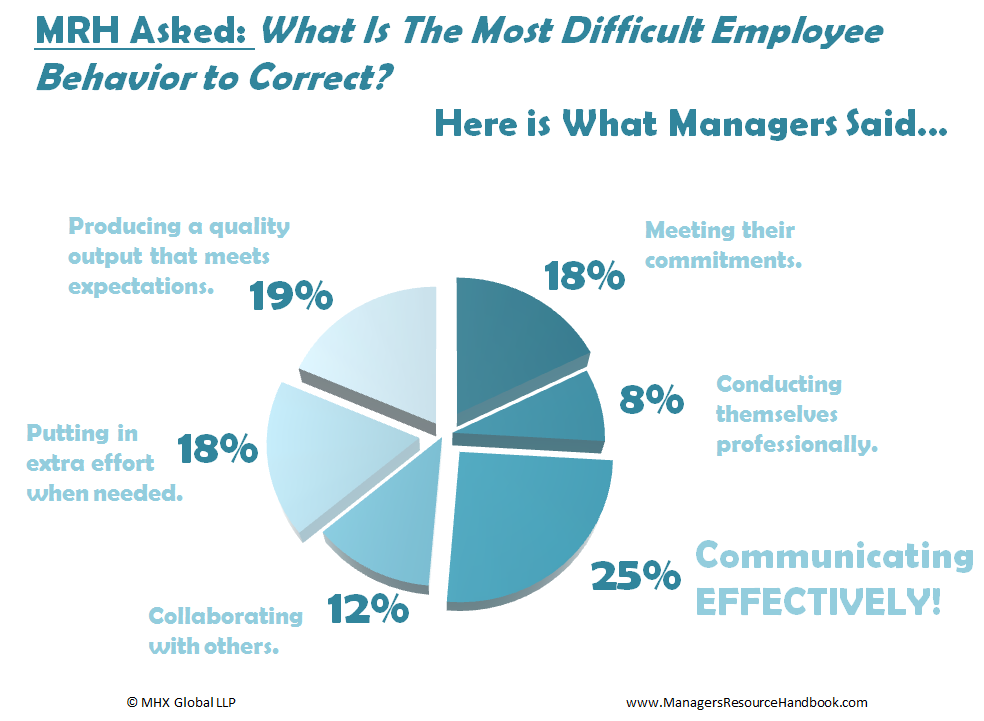
How often does an employee give you a mountain of data that simply left asking yourself the question ‘So…what should I do with this information?’ Whether they come into your office to talk to you or they just send you an email, teaching employees to be better communicators is a common management frustration. In fact, according to an MRH survey, 25% of managers say that the single most difficult employee behavior to correct is their ability to communicate.
Yes, there are things like staff meetings and open door policies to foster an environment of information sharing. Yes, broadcast emails help cascade news and information across the enterprise. But I’m not talking about improving general workplace communication. Nor am I speaking about getting your employees to collaborate more.
I am specifically talking about how you can mentor an employee to be a better communicator in all aspects of their job. Ten years ago, I stumbled upon a fantastic solution to this very common problem. Since then, not a week goes by without me reminding one of my employees about the communication model I’m about to share with you.
Three Questions That Drive Effective Communication
Before I get into the model, it’s important we recognize that everyone is wired differently. This framework will not make an introvert jump on stage in front of thousands of people. And, it will not make a talkative person… less talkative. But it will make every employee better at communicating information to others in a comprehensive manner.
Now, to illustrate how the model works, consider this simple, relatable, email exchange between a manager, Beverly, and her employee, Robert.
Here is the initial request from Beverly:
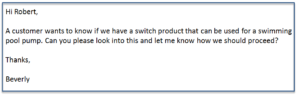
Robert then replies to Beverly’s email, as follows:
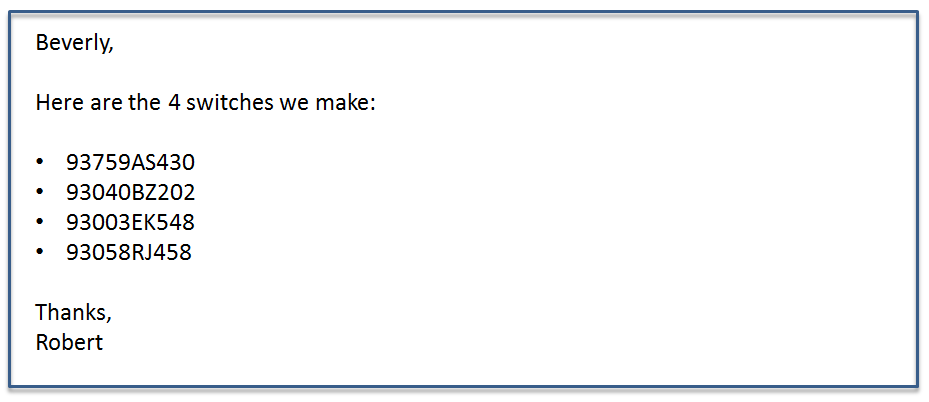
Does this sound familiar? This type of response from an employee (or anyone for that matter) leaves a lot to be desired. Did the employee answer the question? Sort of. Did Robert tell Beverly what to do? No. Does Robert make a recommendation, or advise if these switches could even work with a swimming pool pump? No. He simply provided facts, but not a solution. Beverly’s only viable next step is to follow-up with Robert and ask for more information.
RELATED: 12 Tips to Writing the Perfect Email
Now, let’s get to the communication model that fixes this behavior. Ten years ago I attended an executive leadership course during which the instructor used a phrase repeatedly over the course of the seminar: What? So What? Now What? Over and over she said this to push participants to speak in a more solution-based style. A decade later, this communication model still bounces around in my head on a daily basis.
Let’s break it down.
Part 1: What? – Stating the Facts
The first part of the model is to state the data, facts, or information, as Robert did in the sample email above. This is the What?
When people respond to a question or task like in our example email exchange above, this is the easiest, most natural thing they will do. To them, a sufficient response is simply to gather the information you requested. Aside from simply being short on time, there are three primary reasons why an employee will only state the facts:
- They may not know what to do with the information.
- They do not want to be responsible for making a decision.
- They expect you to make the decision.
As managers, however, when we assign a task or ask a question, we expect employees to come back with solutions to the problem. Simply stating facts is not enough. You employ their skills and talents not only to dig up the necessary details, but also to process information, make decisions (or, at least, help you make decisions), and come back with some sort of solution. This brings us to the next part of the model.
Part 2: So What? – The Analysis
The second part of this communication framework is to synthesize the information that was collected in Part 1. As in the example email exchange above, Robert stated his findings – there are 4 switches. The problem with his reply, though, is that he provided no further explanation or analysis beyond this.
Part 2 of the model serves to remind employees to answer the question “What does this information mean, and why should I care?” In other words, the employee should take the information they gathered and analyze it. What is the significance of the data?
Part 3: Now What? – The Decision
The final part of the framework is the decision, recommendation or action. Based on the information provided and the associated analysis, what action should be taken?
The third part of the communication model should answer the question: “What should I do with this information?” In other words, the employee gathered the information, then they analyzed the data. What are they recommending? If it were up to them, what would they do?
From my experience, this is actually the hardest part of the communication model and where employees struggle the most, both in terms of decision-making and communication. However, this is also the most important part of effective communication because it is the component that drives action.
Getting employees to become comfortable with the third part can take time and mentoring on your part as the manager. Make it clear you value their input, but also let it be known that you expect them to provide the Now What?. Whether you follow their recommendation or pursue an alternative path, it is still something that your employees should include in their communication with others. Mastering the third part of the formula is just as much about the employee getting comfortable with decision-making as much as it is your job to set expectations.
Putting the What? So What? Now What? Principle to Work
The What? So What? Now What? principle is an effective model for communication because answering each question enhances both the thoroughness and completeness by which people communicate. Each pillar has a purpose that completes an entire picture.
Furthermore, the model requires that all three elements are used together. If you just gather data (part 1) and make a decision (part 3) without a thorough evaluation of what the data means (part 2), you may be overlooking a key trend. If you just make a decision without any supporting facts or analysis, there’s a good chance you could be wrong. And, why bother spending the energy to collect information and data if it does not drive you to make a decision or to take action?
The What? So What? Now What? Principle in Action
A great application of this principle beyond just general communication is during high-pressure situations when important decisions must be made. The What? So What? Now What? approach provides a basic framework as well as a logical, analytical approach for decision-making.
- What?: What, exactly, is the issue?
- So What?: Why is it an issue and why should I care?
- Now What?: What do we do in response to this information?
For problem solving situations, be thorough and objective when answering each question. State the facts. Interpret what they mean, then make a decision based on all the known information.
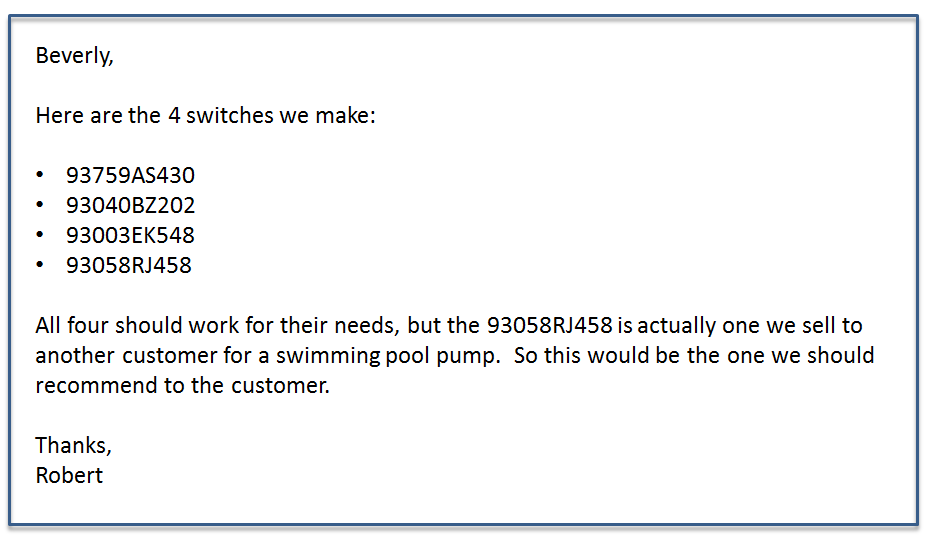
Returning to our example email exchange between Robert and Beverly, here is what the What? So What? Now What? model would do to Robert’s reply:
Robert’s improved reply using the What? So What? Now What? model:
Teaching Employees to Be Better Communicators
More than a decade after first hearing the What? So What? Now What? principle, I continue to find it to be a great teaching lesson for my employees. Not only does it provide a simple 3-step framework to help synthesize a solution to a problem, but in doing so it will help improve the efficiency of information flow around your organization. The next time an employee leaves you hanging, give the What? So What? Now What? communication model a shot.
Looking for More on Communication? You Might Like…
How Are You Communicate With Your Customer?
The Art of the Executive Summary
How to Communicate at Work by BLUFing
Your Organizational Signal Strength