
The Four Levels of Ownership and Accountability

Everyday, our employees make commitments and take actions to complete various job-related tasks. Sometimes this is in response to the responsibilities that we, their managers, assign. However, in many cases the actions they take are simply the result of their own duties: talking with customers, meeting with colleagues, or in support of a given project. Regardless of the circumstances behind these promises, holding employees accountable is a complex topic, one that many business leaders struggle with. That said, the concept of accountability is not just about the employee, but also about how the manager sets the tone and the business culture. Driving a culture of accountability starts by setting expectations that employees follow through with the commitments they make. It also means they take responsibility for their actions. Finally, it means the manager is fair and reasonable with expectations, but consistent evaluating employee performance. In short, holding employees accountable and teaching them to own their actions is among the most challenging dynamics managers will face. Let’s take a closer look.
Four Levels of Employee Accountability
When it comes to the notion of accountability, we must first ask ourselves about how the promise or agreement was made. A great way to think about the commitments employees make is to use a four level scale as shown below:
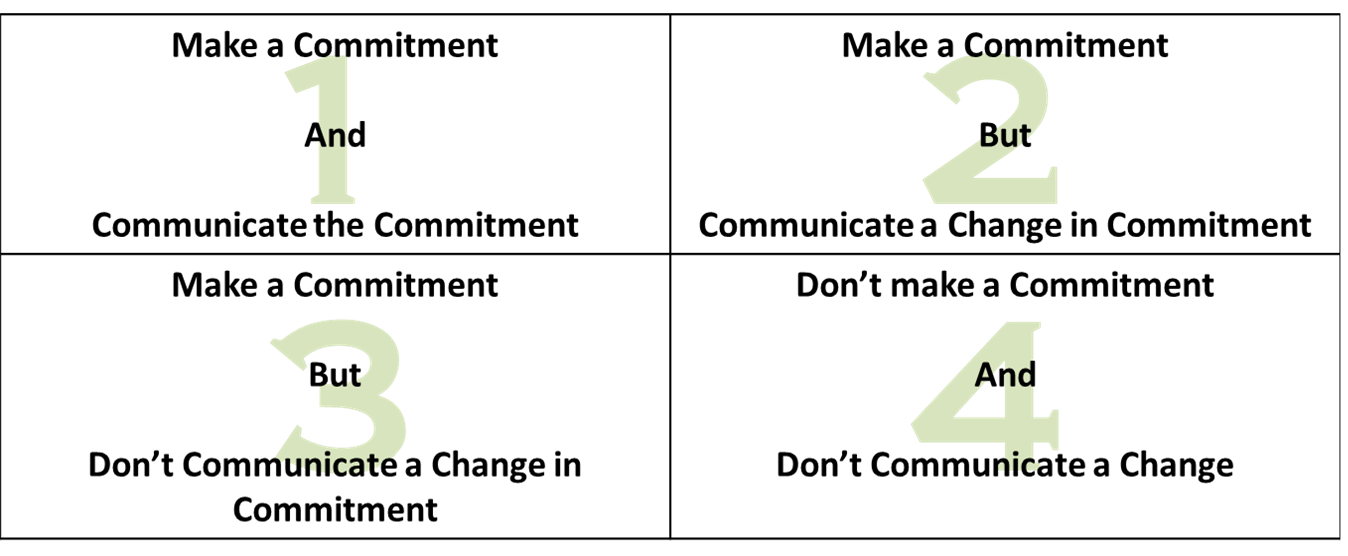
The Four Levels of Ownership
Using this scale, there are really four types of commitments that an employee can make.
Level 1: Make a Commitment and Communicate the Commitment:
On Monday, Robert tells Marie he will have the report done by Friday. Two days later, on Wednesday, Robert stops by Marie’s office to affirm that he will have the report done by Friday as initially promised.
Level 2: Make a Commitment but Communicate a Change to The Commitment:
On Monday, Robert tells Marie that he will have report done by Friday. On Wednesday, Robert stops by Marie’s office to tell her something came up and he will need until the following Monday.
Level 3: Make a Commitment but Don’t Communicate a Change in Commitment:
Robert tells Marie that he will have report done by Friday. However, Robert does not stop by Marie’s office to tell her something came up and he will need more time. When Friday arrives, Marie is surprised to find out the report is not done.
Level 4: Don’t Make a Firm Commitment and Don’t Communicate a Change to The Commitment:
Robert does not tell Marie when he will have report done. As things come up, Robert does not make Marie aware and the report seems to take far longer than it should have.
Hold Employees Accountable Relative to Their Commitment
When we look at this scale, clearly Level 1 is ideal. The employee makes a commitment and follows through; even confirming ahead of time they’ll meet their promise. This level of ownership not only fulfills the promise to the other party, but it also keeps the other party informed. In this scenario, there are no concerns with accountability.
Bonus Tip:
In public settings, acknowledge employees who fulfill their commitments and demonstrate Level 1 accountability. Doing so sets an example for other employees as to what is expected.
With Level 2, the employee makes a commitment, but then communicates that there will be a change to their promise. Level 2, is also acceptable. While ideally, things are completed as initially committed, the business environment is a constantly changing set of surroundings and priorities. With Level 2, the employee communicates what’s happening and recommits. Again, there are no serious concerns with accountability.
Continuing down the scale, Level 3 employee ownership describes a situation when an employee makes a commitment, but fails to communicate a change when issues emerge. On our scale, Level 3 is actually the worst – it is a lack of accountability. When an employee makes a commitment or promise to do something, the other party expects something to happen at a certain time or place. Naturally, when this does not happen, the commitment was missed. As a manager, one of the most frustrating things to hear from a colleague is that an employee committed to do something, but did not fulfill the obligation, nor communicated a change.
How to Handle A Concern with Level 3 Accountability:
In situations like this, a brief conversation with the employee is often warranted to understand what happened. Typically, it is the result of an innocent mistake. A short conversation is an opportunity for the manager to gently reiterate expectations.
However, if the employee has a history of this behavior, a more deliberate conversation may be appropriate. Ask why the employee felt they could make the commitment, and what led to missing it. Also seek to understand why they did not communicate a change was need.
Other Factors to Consider:
- Is the employee overworked or stretched too thin?
- What prevented the employee from communicating a change in delivery date?
- Were the expectations of work to be performed clear?
- Did a prior commitment impact the employee’s ability to work?
- Does the employee have the skills to do the work they committed to?
Level 4 ownership can lead to some debate. In Level 4, an employee does not make a firm commitment, nor do they have any follow-up with the peer. In this example the employee may say something like “I’ll try to look into those numbers when I get time.” In theory, there was no promise, therefore no obligation. While not necessary a broken commitment, it is still not ideal. In business, our job as colleagues and employees is to work with one another, and help each other out to make the firm successful. While there is nothing explicitly wrong with Level 4, when another person seeks their support and expertise, professional etiquette should lead one to make a commitment to help.
Creating a Culture of Accountability
To create a culture of accountability and personal ownership of commitments, here are some tips:
- Encourage employees to communicate openly to avoid confusion.
- Reiterate the importance of personal commitments during staff meetings.
- Make it clear that communicating a change to a commitment date is to be rewarded, not punished.
- Admit to mistakes so there is a level of trust between coworkers.
- Share positive examples of when employees went above and beyond to meet their commitments.
Final Thoughts
Ultimately, managers and business leaders are responsible for holding employees accountable. But accountability should be connected and proportionate to the level of commitments made, and how the employee handled the situation. When evaluating an employee’s performance and personal ownership of their actions, the above scale can help address any performance gaps.
Looking for More on Managing Employee Performance? You Might Like…
Writing Employee Performance Reviews The Right Way